Heard Before It Was Seen: The Audio Strategy That Made Natural Selection Impossible to Ignore

Most movies sell you on what you see. A sweeping landscape. A recognizable face. An explosion big enough to justify the IMAX ticket. Natural Selection took a different road entirely — and it started with a sound test that, by all accounts, nobody expected to work as well as it did.
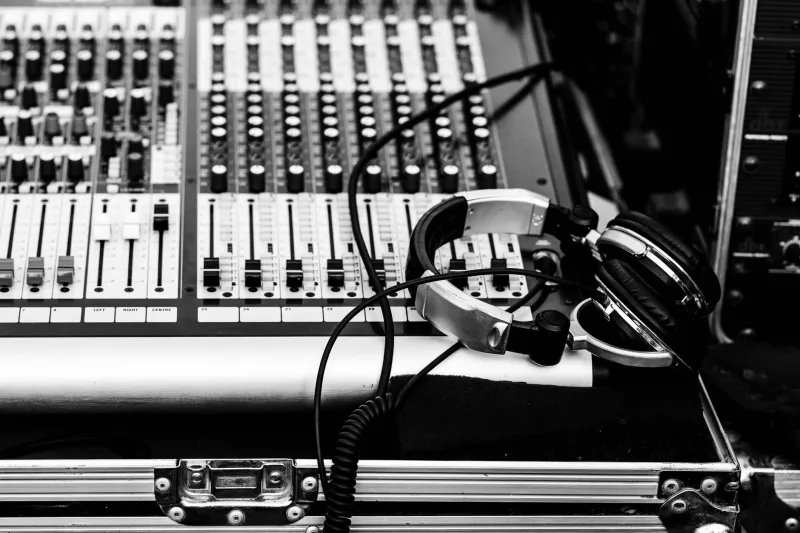
Months before the film had a finished cut, the marketing team sat a focus group down in a dark room, played them two and a half minutes of audio, and watched what happened. No visuals. No context. Just the raw sonic landscape the film's audio team had spent the better part of a year building from the ground up.
The results, according to the people in that room, were not subtle.
The Test Nobody Thought Would Work
"We honestly did it as a gut-check more than anything," says the film's lead sound designer. "We wanted to know if what we were building was landing emotionally. We didn't expect it to become, like, the blueprint for how we marketed the whole thing."
But that's exactly what happened. Participants in the focus group — regular moviegoers, not film industry insiders — came out of the session describing physical reactions. Elevated heart rate. The instinct to hold their breath. One woman said she gripped the armrest so hard her hand cramped. And they'd seen nothing. Not a single image.
The marketing team took notice immediately.
What followed was a deliberate, somewhat unconventional campaign built around the idea that Natural Selection's audio wasn't just a complement to the visuals — it was a standalone experience capable of doing serious emotional work on its own.
The Sounds That Stuck
So what exactly were people reacting to? The audio team points to a handful of specific elements that kept surfacing in audience feedback.
First: the low-frequency rumble they internally called "the approach." It's a sound that occurs in the film whenever a predator is moving toward something without yet being visible. Technically, it's a layered composite — part animal vocalization, part processed environmental recording, part something the team is being deliberately cagey about. "We're not giving away everything," the lead designer laughs. "But I'll say there are sounds in there that your body recognizes before your brain does. That's intentional."
Second: a specific high-pitched frequency embedded in what audiences initially perceive as silence. Several test viewers described it as "a ringing that wasn't a ringing" — present enough to create unease but subtle enough that people weren't sure they were actually hearing it. "That one is doing a lot of heavy lifting in the trailer," notes the film's supervising sound editor. "It's the reason people feel tense in moments where nothing is technically happening on screen."
Third — and this one surprised even the team — a particular breath. A single, irregular exhale that appears three times in the film at key moments. Focus group participants couldn't always identify it consciously, but when researchers played it back in isolation, nearly everyone reacted viscerally. "It sounds like something alive that doesn't want you to know it's there," one participant wrote in their feedback form. That description ended up influencing the language used in the film's early promotional materials.
Building the Trailer Around the Ear
When it came time to cut the official trailer, the marketing team made a call that raised eyebrows internally: they built the edit around the audio, not the other way around. Typically, a trailer is cut visually first, then scored and mixed. Here, the sound designers were in the room from day one, essentially co-directing the pacing of what audiences would experience.
"There were moments where we'd have a visually strong shot and we'd pull it because the audio wasn't right for that beat," says one of the editors involved. "That's not how it usually goes. But the whole philosophy of this film is that the wild isn't something you watch — it's something you're inside of. The trailer had to reflect that."
The result was a two-minute cut that front-loaded the audio experience so aggressively that early online reactions almost universally mentioned sound before image. Social media posts from people who'd seen the trailer described turning their volume up, then immediately regretting it. That's a specific kind of word-of-mouth that money can't manufacture — and the team knew it.
Why the Haunting Effect Is Real
Several participants in the original focus group reported that they continued hearing elements of the audio days after the session. One man described waking up at 3 a.m. convinced he'd heard "the approach" outside his apartment window. A woman said she found herself scanning a parking garage before getting to her car — not because she was afraid, but because her nervous system had apparently decided to stay on alert.
The sound designers are careful not to overstate their own cleverness here. "A lot of this is just how human auditory processing works," one explains. "We evolved to remember threatening sounds. If something you hear registers as a potential danger, your brain holds onto it. We didn't invent that. We just tried to work with it honestly."
That honesty — the commitment to sounds rooted in real biological and environmental recording rather than synthetic movie-monster noise — is what the team believes separates Natural Selection's audio identity from the standard blockbuster toolkit. Nothing in the film's soundscape was designed to be cool. It was designed to be true. And apparently, true is scarier.
What Comes Next
The audio-first marketing approach hasn't stopped at the trailer. The team has been quietly seeding specific sound elements into promotional materials across platforms — podcast ads, social video clips, even a partnership with a streaming music service that placed short audio fragments into ambient playlists without labeling them. Some listeners noticed. Others just felt vaguely unsettled and didn't know why.
Whether that kind of campaign is brilliant or slightly unhinged probably depends on your perspective. The focus group participants who lost sleep over it might have opinions either way.
But here's the thing: they're all going to see the movie. And they're all going to bring someone with them.
Survival was never this cinematic. Turns out, it was never this loud either.