Wildlife, Cameras, and Zero CGI: The Radical Filmmaking Philosophy Behind Natural Selection
There's a moment about forty minutes into Natural Selection where a predator stalks its prey through chest-high grass, and the camera work is so uncomfortably intimate that half the test screening audience reportedly held their breath. No digital effects. No studio backlot. Just a cinematographer belly-down in the Serengeti, sweating through his gear, praying the shot would hold.
That's not an accident. It's a philosophy.
Director Marcus Hale has spent the better part of three years developing what his crew affectionately calls "the blur" — a production methodology designed to make audiences genuinely unsure whether they're watching a nature documentary or a scripted film. The results are unlike anything currently in theaters, and the techniques behind them are equally unconventional.
Starting With the Real Thing
Most narrative films would shoot the script first and then figure out how to make it look authentic. Hale flipped that entirely. Before a single line of dialogue was finalized, his second-unit wildlife team spent eight months embedded with documentary filmmakers, capturing genuine behavioral footage across four continents.
"We didn't want to fake nature," Hale explained during a recent production roundtable. "We wanted to find the story inside nature and then build the human narrative around it. The animals aren't props. They're co-directors in a way."
Cinematographer Dana Reeves, who previously shot wildlife segments for several acclaimed nature series, described the challenge of operating in two modes simultaneously. "On a straight documentary, you're purely reactive. You go where the action takes you. On a narrative film, you need specific moments that serve the story. Merging those two instincts was genuinely hard at first."
The solution was what the team calls "structured patience" — identifying known behavioral patterns in specific ecosystems, positioning cameras accordingly, and then waiting. Sometimes for days.
The Camera Rigs That Changed Everything
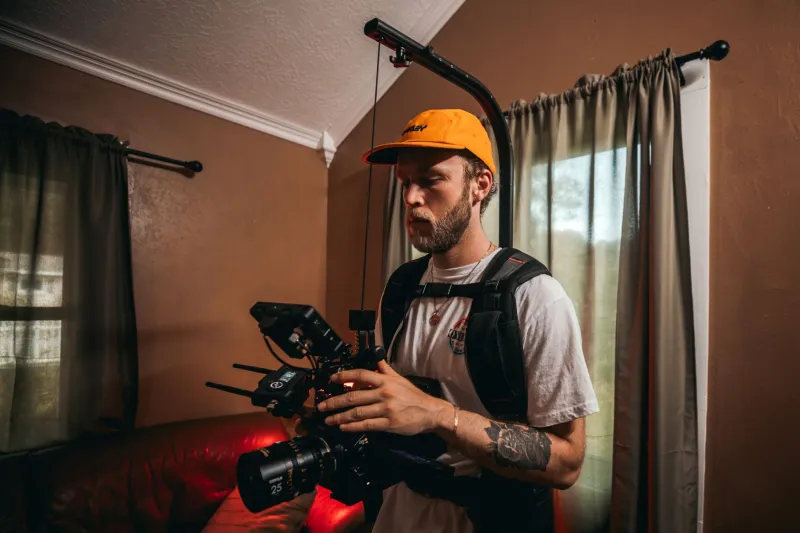
Capturing authentic wildlife behavior is one thing. Making it feel cinematic while preserving that rawness is another problem entirely. The Natural Selection team developed custom low-profile camera rigs that could be left in position for extended periods without disturbing local fauna.
"Animals habituate to objects faster than most people realize," explained second-unit director Priya Okonkwo. "After 48 to 72 hours, most species essentially stop registering a stationary camera as a threat. That's when you start getting the footage that looks impossibly close."
Reeves added that the team used a hybrid approach for sequences requiring specific framing. "We'd have the wildlife footage from the remote rigs — totally unscripted, totally real — and then we'd shoot our narrative elements at matching focal lengths and color temperatures. In the edit, the cuts become nearly invisible."
The result is a visual grammar that constantly keeps viewers off-balance in the best possible way. A wide establishing shot of an actual predator hunt dissolves into a scripted sequence, and the transition is seamless enough that audiences have reportedly debated in post-screening discussions about which moments were "real."
When Nature Rewrites the Script
Of course, working with actual wildlife means the natural world occasionally has opinions about your shooting schedule.
One of the film's most talked-about sequences — a riverbank confrontation that has already generated significant buzz from early screeners — wasn't in the original script at all. The wildlife unit captured an unexpected behavioral interaction between two competing species, and Hale rewrote an entire third-act subplot around it within 48 hours.
"That's the thing about nature," Hale said, grinning. "It's a better writer than any of us. When something real happens in front of your camera that's more dramatic than what you planned, you adjust."
This improvisational approach extended to the human cast as well. Several actors spent weeks in the field alongside the wildlife unit before principal photography began, not to perform, but simply to observe. The goal was physical and psychological authenticity — understanding how the body actually responds to genuine environmental stress rather than simulating it on a soundstage.
"You can't fake the way your eyes move when you hear something you can't identify," said one cast member during a press day interview. "After spending time out there, that response became automatic."
The Documentary Filmmakers Who Kept Everyone Honest
To maintain scientific and behavioral accuracy throughout production, Hale brought on two veteran wildlife documentary filmmakers as permanent consultants. Their job was essentially to veto anything that misrepresented actual animal behavior, even if it made for a more dramatically convenient scene.
"There were absolutely moments of friction," Reeves admitted with a laugh. "You want a particular animal to do a particular thing, and the consultant is telling you that's not how that species behaves in that habitat. But those constraints ended up forcing more creative solutions than we would have found otherwise."
The commitment to behavioral accuracy extends to the film's sound design as well. Rather than relying on the standard Hollywood library of animal vocalizations — many of which are famously inaccurate or borrowed from entirely different species — the audio team recorded location sound extensively and worked with wildlife acoustics specialists to ensure every call, rustle, and environmental sound reflects documented reality.
Why It Matters for the Audience
All of this technical and philosophical commitment serves a single purpose: emotional truth. When viewers watch Natural Selection, the survival stakes feel genuine because the world surrounding the story actually is genuine. The tension isn't manufactured through editing tricks or jump scares — it emerges from a real ecosystem operating by real rules.
"Audiences are smarter than Hollywood usually gives them credit for," Hale said. "They can feel when something is fake, even if they can't articulate exactly why. We wanted to make a film where that feeling never showed up."
Based on early audience reactions, it seems like they've pulled it off. Natural Selection isn't just blurring the line between documentary and cinema — it might be erasing it altogether.