The Cut That Made It Real: Inside the Editing Room Where Natural Selection Came to Life
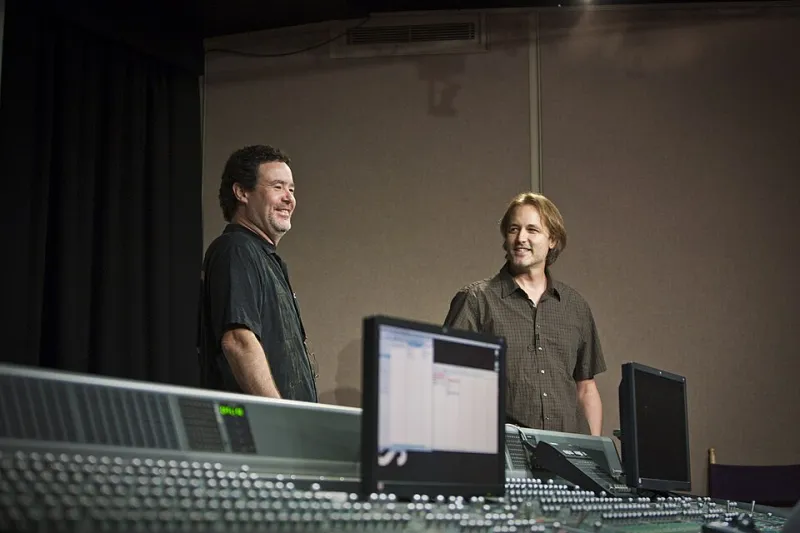
Photo: Vancouver Film School, CC BY 2.0, via Wikimedia Commons
Most people think the hard part of making a film like Natural Selection is getting the shot. Spending months in remote terrain, waiting for predators to move, praying the light holds, hoping the camera doesn't spook a leopard mid-stalk — yeah, that's brutal. But ask anyone on our post-production team and they'll tell you something different: the real war started the moment the footage came back.
When you're working with zero CGI and no controlled sets, you don't get neat little clips that match your storyboard. You get thousands upon thousands of hours of real-world material — unpredictable, gorgeous, sometimes unusable, occasionally transcendent. Shaping that into a coherent narrative that actually grips an audience? That's a different kind of survival challenge entirely.
A Mountain of Material
Let's talk numbers for a second, because they matter. By the time principal photography wrapped, the Natural Selection editing team was staring down a footage library that would take months just to watch in full, let alone organize. Field crews had been rolling cameras almost continuously across multiple locations and seasons. That's the nature of documentary-style wildlife filmmaking — you can't call "cut" on a lion hunt and ask for a second take.
Lead editor Dana Mercer, who came to this project after cutting several acclaimed nature documentaries for major US networks, described the initial weeks as "genuinely overwhelming in a way I hadn't experienced before." The team built a custom logging system just to keep track of what they had, tagging footage by species, behavior type, lighting condition, and emotional register. Before a single cut was made, they had to understand the shape of what existed.
"We weren't just looking for good shots," Mercer explained. "We were looking for story. And story hides. You have to go find it."
Pacing Without a Safety Net
One of the defining editorial decisions the team made early on was to resist the temptation to over-cut. In a lot of Hollywood survival thrillers, rapid editing does a lot of the heavy lifting — quick cuts create the illusion of urgency even when the underlying footage is pretty tame. Natural Selection couldn't lean on that crutch, and honestly, the team didn't want to.
The philosophy that emerged was rooted in patience. Let the real moment breathe. Trust the audience to feel the tension building in a slow zoom, in a held frame, in the way a predator's ears flatten before it moves. This approach demanded a different kind of editorial rhythm — one that alternated between long, almost meditative observational sequences and sudden, explosive cuts that hit you in the chest precisely because you'd been lulled into stillness.
Associate editor Theo Vásquez put it this way: "Nature doesn't do jump cuts. But nature absolutely does suspense. Our job was to find where the suspense already lived in the footage and just... get out of its way."
That's easier said than done. The team spent weeks on individual sequences, testing different cut points, watching how even a single frame difference could shift the emotional weight of a scene. The stalk sequences — which are some of the most gripping stretches of the film — went through dozens of iterations before the pacing felt right.
Sound as a Storytelling Tool
If the picture editing was a marathon, the sound design was where Natural Selection really found its identity as a thriller. Working closely with supervising sound editor Renata Okafor, the editing team treated audio not as a finishing touch but as a structural element woven into every cut.
Okafor's approach drew heavily from the world of psychological horror — not to manufacture false dread, but to amplify what was genuinely present in the natural world. The low-frequency rumble of a predator's breathing. The specific crunch of dry grass underfoot. The way ambient sound drops right before something violent happens, a phenomenon that occurs in real ecosystems and that audiences instinctively register as wrong, even if they can't say why.
"Real wildlife sound is incredibly rich and incredibly strange," Okafor said. "There are textures in there that most people have never consciously heard before. When you isolate and amplify those, you don't need a conventional score to tell people to be scared. The world is already doing that."
The decision to use a restrained, mostly non-melodic score — composed in close collaboration with the editing timeline rather than added afterward — was directly tied to this philosophy. Music enters Natural Selection almost reluctantly, as if the film itself is acknowledging that sometimes the real thing needs a little help crossing into cinema.
The Narrative Architecture Problem
Here's the challenge that doesn't get talked about enough in behind-the-scenes coverage of wildlife filmmaking: real animals don't follow three-act structure. A hunt that would be cinematically perfect in the second act might have happened on day four of filming. A quiet, contemplative scene that works beautifully as an opening might have been shot six months into production.
The Natural Selection editing team essentially built the film's narrative architecture in post, constructing a coherent emotional journey from material that existed in no particular order. This required not just technical skill but genuine storytelling instinct — understanding which moments could carry the weight of a turning point, which images could function as visual callbacks, and where the audience needed to breathe before the next sequence hit.
Mercer compared it to puzzle-making, but with pieces from multiple different puzzles. "You're not just finding the picture," she said. "You're deciding what picture you're making while you're finding it."
What Comes Out the Other Side
The final cut of Natural Selection is the product of thousands of individual decisions, each one made in service of a single goal: making you feel like you're there. Not in the sanitized, everything-perfectly-framed way of conventional wildlife documentaries. In the raw, disorienting, pulse-raising way of something genuinely uncontrolled.
There's a particular kind of satisfaction that comes from knowing every moment of tension in this film was earned — not manufactured in a visual effects suite, but found, recognized, and preserved by a team of editors who understood that the wild had already done the dramatic work. Their job was just to make sure none of it got lost on the way to the screen.
They didn't. And when the lights go down, you'll feel it.